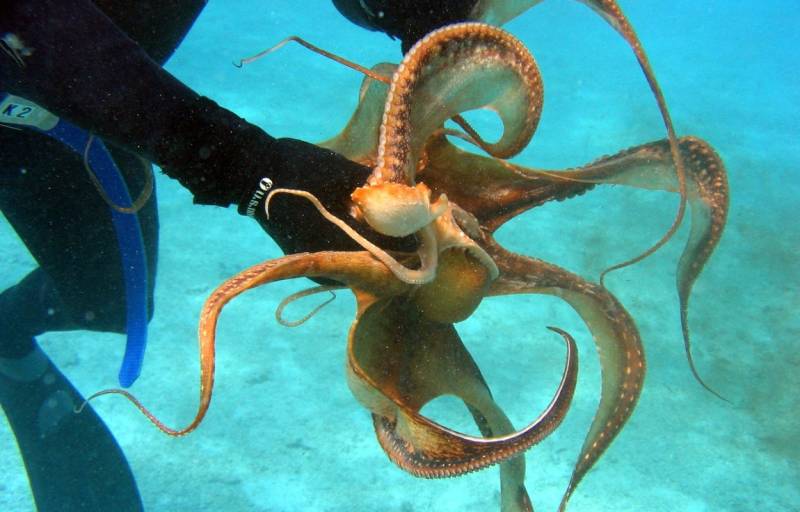
Spain wants to ban octopus farming due to their superior intelligence
ARCHIVED ARTICLE -
Spain opens the door to a pioneering law against the breeding and sale of octopuses
The long-running debate on animal welfare has moved beyond the usual confines of dogs and cats, extending now into the depths of the ocean. Spain has become a focal point of an international controversy pitting two difficult-to-reconcile models against each other: the development of new forms of food production and the growing ethical demands surrounding animal rights.
The initiative itself stems from a growing body of scientific research that has transformed our perception of these cephalopods. Far from being mere marine resources, octopuses are now described by the scientific community as beings with extraordinary cognitive abilities, capable of learning, solving complex problems and experiencing emotions associated with stress and suffering.
The evidence that's been building up points to one clear conclusion: octopuses have a highly developed nervous system that allows them to interact with the world around them in remarkably sophisticated ways. That biological complexity has led to growing recognition of them as sentient animals, creatures with a far richer inner life than anyone previously gave them credit for, not unlike the way we think about our own pets.
Research suggests that confining octopuses in small spaces generates significant stress. Their naturally solitary and territorial behaviour sits uncomfortably with the conditions of intensive farming, and the results can be deeply troubling, with abnormal behaviours including aggression and self-mutilation.
For many animal welfare experts, industrial octopus farming simply can't be reconciled with any reasonable ethical standard.
Supporters of the model argue it could take pressure off wild populations and help secure global supply, but critics say no economic or environmental benefit is worth the moral cost.
That clash of views has put Spain in a delicate position internationally.
There's also the very practical question of how you slaughter an octopus humanely. The methods proposed so far have been widely challenged by the scientific community, with techniques such as gradual cooling in ice water criticised as potentially prolonged and painful, giving animal welfare groups further ammunition for pushing a total ban rather than simply tighter regulation.
The proposed legislation goes further than just domestic production too. It would also restrict the sale of products from octopus farms in other countries, which would represent a significant shift in how international food markets operate, introducing a relatively new concept into food legislation: that the intelligence and sentience of a species can be grounds for excluding it entirely from industrial exploitation.
However the debate plays out, Spain is navigating territory that goes well beyond economics.












 Spanish News Today
 Alicante Today
 Andalucia Today